The other day, browsing on Xfinity for something to watch in the "Free Movies" category, I came across the 1981 film, "Whose Life is it Anyway?" starring Richard Dreyfus.
The film told the story of a promising young sculptor who was severely injured in a sportscar vs. semi-truck accident. Dreyfus' character suffered a high cervical spinal cord transsetion, and was left a quadriplegic. Moreover, his internal bleeding resulted in a bilateral nephrectomy - so he had no kidney function at all and was placed on regular hemodialysis.
After the gravity of his situation sunk in, the sculptor asked to have no further treatment - and without dialysis, he would certainly die.
The request spawned an enormous debate among hospital personnel, finally resulting in a private trial - and ultimately, we assume, in the sculptor getting his wish.
It was interesting to see how our medical culture has changed. The scenes depicting doctors smoking in the lounge were obsolete, of course. Though I remember working to change the smoking policy at Swedish/Ballard in the late '80s. Until that time, smoking was common in most hospitals - among patients and personnel. Imagine!
"Whose Life is it Anyway?" was highly "sanitized." Dreyfus' character didn't look like any quadriplegic I've known: no contractures, no muscle atrophy, no visible surgical scars.
But his deep sigh when a dialysis treatment started was highly recognizable. I so remember this with Steve; he hated "being on the hose," although he clearly valued the fact that dialysis kept him alive.
I remember seeing a booklet at the Northwest Kidney Centers - entitled "When It's Time to Stop Dialysis." I never read it; we simply weren't "there."
But, how wonderful it is that a patient wouldn't have to put up a fight to end treatment - at least not with the court. We now see withdrawal of treatment as a patient's right.
Steve and I had spoken many times about "not letting him suffer." When it's time to die, I believe a person knows this at a very deep level. I suspect that's what Steve was conveying when he said, "Wasn't I supposed to die yesterday?" - the day before he actually died.
End of life issues will always be charged, tough issues - for patients, for families, for society in general. I'm personally glad we've made some progress in this area since the Dreyfus film. It's interesting to watch; you might put it on your list.
Take care,
Linda Gromko, MD
Tuesday, June 28, 2011


Monday, June 6, 2011
The Feminist Widow in Car World - and The Susan B. Komen 5K Walk
Well, I'm not sure what this post has to do with dialysis, but I'm very sure what it has to do with widowhood. Even in an egalitarian relationship like Steve and I had, there were certain things he just did better than I did - and therefore, fell to him. Like car buying/leasing.
Steve loved cars. Cars with every new doo-dad, every new technology. I had never known that cars could even come with heated seats until I met Steve with his grey VW Toureg. He had the heated seats, the leather interior, the teak trim, and all the rest. It was nice, but it was, well - a car.
For me, a car has to be dependable - and handle reasonably well in the snow. A CD player would be great. But that's about it.
Steve chose my last car, a Suburu Forrester - sort of a small SUV that gave me the illusion of being able to venture into mountains and take a kayak somewhere. Maybe that was his illusion. In truth, I basically went to Costco and that was about it.
Another truth about widowhood is that I need to take a careful look at finances, cutting expenses where I can. A lower lease payment seemed reasonable to me.
Looking at several cars, I could "feel" Steve saying "don't even think about that little toy car, Linda Jo," and I passed up a compact sedan in a tomato bisque color. That would have completely offended Steve's design sensibilities!
But settling into a VW Jetta with a lower payment and enough bells and whistles for anyone's purposes, I felt at peace. At peace, mind you!
Feminist Dr. Linda still seeking Steve's approval about a car purchase? Well, yeah.
But I hear this from other widows, too. Wanting to ask him something; wanting to tell him something. Wanting to poke him in the arm for not being there when I had a car question.
Widowhood? Not my favorite chapter.
But then, there was the earlier part of my day. Yesterday morning, I joined a few thousand others in the Susan B. Komen 5K Walk (or "Walk-not-Run-for-the-love-of-God!") For the Cure.
That's a reality check for you. Our group of sixteen included daughter Brita and her pal Carla. We were walking in support of one of my officemates, Margaret Provenzano, diagnosed with breast cancer a year ago - and doing beautifully. Her pink "surviver shirt" spoke volumes.
We spotted a man carrying his pre-schooler on his shoulders. His T-shirt read "In memory of my mother; in memory of my wife; with hope for my daughter."
For all the free bagels and pink flipflops, this is serious stuff.
Yet, I remember when I started my practice some twenty-plus years ago, breast cancer was practically a death sentence. Period. Not anymore, though.
I hope the future of kidney disease gets brighter. For now, prevention is the only real answer. As Steve would say, "By the time you're on dialysis, that ship has sailed."
But that's not completely true, either. There's transplant. There's better dialysis. There's home dialysis in its various forms.
Yesterday was a good reminder of the various burdens we bear: widowhood, breast cancer, kidney failure - and the very real hope that's tangled up in all of them.
Take care,
Linda Gromko, MD
Steve loved cars. Cars with every new doo-dad, every new technology. I had never known that cars could even come with heated seats until I met Steve with his grey VW Toureg. He had the heated seats, the leather interior, the teak trim, and all the rest. It was nice, but it was, well - a car.
For me, a car has to be dependable - and handle reasonably well in the snow. A CD player would be great. But that's about it.
Steve chose my last car, a Suburu Forrester - sort of a small SUV that gave me the illusion of being able to venture into mountains and take a kayak somewhere. Maybe that was his illusion. In truth, I basically went to Costco and that was about it.
Another truth about widowhood is that I need to take a careful look at finances, cutting expenses where I can. A lower lease payment seemed reasonable to me.
Looking at several cars, I could "feel" Steve saying "don't even think about that little toy car, Linda Jo," and I passed up a compact sedan in a tomato bisque color. That would have completely offended Steve's design sensibilities!
But settling into a VW Jetta with a lower payment and enough bells and whistles for anyone's purposes, I felt at peace. At peace, mind you!
Feminist Dr. Linda still seeking Steve's approval about a car purchase? Well, yeah.
But I hear this from other widows, too. Wanting to ask him something; wanting to tell him something. Wanting to poke him in the arm for not being there when I had a car question.
Widowhood? Not my favorite chapter.
But then, there was the earlier part of my day. Yesterday morning, I joined a few thousand others in the Susan B. Komen 5K Walk (or "Walk-not-Run-for-the-love-of-God!") For the Cure.
That's a reality check for you. Our group of sixteen included daughter Brita and her pal Carla. We were walking in support of one of my officemates, Margaret Provenzano, diagnosed with breast cancer a year ago - and doing beautifully. Her pink "surviver shirt" spoke volumes.
 |
| Margaret and a group of fans ("Team Provenzano") pose after the Susan B. Komen event on June 5, 2011. |
We spotted a man carrying his pre-schooler on his shoulders. His T-shirt read "In memory of my mother; in memory of my wife; with hope for my daughter."
For all the free bagels and pink flipflops, this is serious stuff.
Yet, I remember when I started my practice some twenty-plus years ago, breast cancer was practically a death sentence. Period. Not anymore, though.
I hope the future of kidney disease gets brighter. For now, prevention is the only real answer. As Steve would say, "By the time you're on dialysis, that ship has sailed."
But that's not completely true, either. There's transplant. There's better dialysis. There's home dialysis in its various forms.
Yesterday was a good reminder of the various burdens we bear: widowhood, breast cancer, kidney failure - and the very real hope that's tangled up in all of them.
Take care,
Linda Gromko, MD
Friday, May 27, 2011
Steve's "Medical Eulogy" for Memorial Day
Because it's Memorial Day weekend, I've decided to reproduce the eulogy I shared for Steve's Memorial Party on May 15, 2011.
"My mother and father had a wonderful marriage for fifty years. When my father died, my mother said, 'I just thought we'd have more time."
Steve and I were together for a little over six years. But by any standard, it was a rich and intense time. I'd venture that we had in six years what many couples never achieve in decades. We tackled dragons together. And we both knew that we were fully loved by the other.
We gave each other amazing gifts.
From Steve:
But the real challenges we faced involved Steve's failing health.
Having had high blood pressure and diabetes for many years - and a lifestyle devoted to culinary pleasure, Steve's health crashed in September of 2007 when he fell into Acute Renal Failure. He had to go on dialysis - the kidney machine - immediately. I am convinced that renal failure is one of the worst health conditions a person can experience.
The Northwest Kidney Centers offer the "Choices Class" for new kidney patients. In truth, it should be called the "No Good Choices Class." The options are: dialysis, kidney transplant, or - what Steve and I called "Door Number Three" - death within two weeks with no treatment.
We set out to learn how to do Home Dialysis, and we did it for over three years. Steve and I became serious advocates for Home Dialysis. I write a kidney blog, and with my friend Jane McClure, wrote "Arranging Your Life When Dialysis Comes Home" - which is the only resource of its kind.
I also wrote a very personal book, "Complications: A Doctor's Love Story. (Steve lobbied hard for the title "Steve Williams is Sexually Gifted.")

In February 2009, Steve received a living donor kidney transplant - the donor being his wonderful niece Teresa. And it was during this time that our friend Bob Bost wrote the song "Fight the Good Fight," CDs of which are here for you to take home today as you remember Steve.
The transplant didn't work due to a variety of medical calamities. The night that Teresa's kidney was removed from Steve was one of the saddest of our lives. Steve spent the next year healing and dialyzing. But in the fall of 2009, he began having problems with his heart; he'd already had a bypass when he was fifty. On Thanksgiving night, Steve had a heart attack during dialysis - on Bainbridge Island. I earned my stripes and a few grey hairs that night as we got through it, and took the 4:40 a.m. ferry into town for a brand new coronary artery stent.
What we were to learn in March of 2010 was sobering: Steve's aortic valve - the valve that connects the large left ventricle to the aorta (our biggest artery) had narrowed from the normal size of about a quarter - to the diameter of a #2 pencil eraser.
When he got to surgery, Steve's cardiac ejection fraction was only fifteen percent; normal is four times that. Dr. Joseph Teply - the most courageous surgeon I know - plucked Steve from nearly certain death during that thirteen hour surgery.
It was a feat of medical magnificance! Yet when Steve and Dr. Teply would see each other later, they'd talk about fishing - they were just two guys talkin' about fishing!
Steve's recovery was complicated by a little understood condition known as "Critical Illness Myopathy/Polyneuropathy. Because of this, Steve never walked again. He required twenty-four-hour-a-day care, and, of course, continued dialysis.
But Steve and I made lemonade out of our buckets of lemons. We dated - via Access Bus - the little Metro buses that carry the physically disabled. Access Buses are a mixed bag - never ego enhancing! But they were our ticket out!
On one of our last dates, Steve had an elevator door close on his foot, and that night, I noticed a large blood blister on his big toe. He had gangrene of the forefoot within three weeks, and a below-the-knee amputation the following week.
Because he had survived everything else, it really hadn't occurred to us that Steve wouldn't get through this. We even announced to our friends after the surgery, "Steve Williams lands on his foot!"
We were able to get him home Monday, April 11 - challenged by providing adequate nutrition and pain control. We honestly thought we could do better at home than in the hospital. And he was so glad to be home.
On that Tuesday, the evening before he died, Steve asked Tim and me, "Wasn't I supposed to die yesterday?"
Offering to take him back to the hospital, Steve's eyes opened wide - "No, I can't go back to the hospital; they don't let you die in the hospital."
I thought it was the narcotics talking. I fed Steve chicken broth, dialyzed him, and tucked him in for the night.
But the next morning, Steve was unresponsive - eyes open, a strong pulse, but unresponsive. His heart arrested in the Medic One van on the way to Swedish Medical Center.
On my call, Steve had appropriately gone from a "full code" to "no intervention" in the blink of an eye. Dr. Smiley Thakur, our heroic nephrologist, had shared, "When you are doing something TO someone rather than FOR someone, it's time to make that call."
Steve had always told me that he wanted to die, "when the banter stopped."
And it was time.
Take care,
Linda Gromko, MD
* * * *
"My mother and father had a wonderful marriage for fifty years. When my father died, my mother said, 'I just thought we'd have more time."
Steve and I were together for a little over six years. But by any standard, it was a rich and intense time. I'd venture that we had in six years what many couples never achieve in decades. We tackled dragons together. And we both knew that we were fully loved by the other.
We gave each other amazing gifts.
From Steve:
- I received an appreciation of my own competence as a physician. I used to joke with other doctors that just living with Steve should earn me Continuing Medical Education Credits!)
- And I learned that I am a writer. (Steve used to beg me to ready my chapters to him. Of course, they were all about him. He used to use that narcissistic line, "Enough about me; tell me how YOU feel about me...")
- It's true I saved his bacon a time or two on the medical front.
- I calmed him with hypnotherapy - it was the only thing that helped him sleep.
- I had fun with him.
- But most importantly, I loved him deeply.
* * * *
Although this used to embarrass Steve enormously, we met on Match.com. I had put in an ad stating, "I'd like to meet a nice Democrat."
And Steve responded, "Kerry delegate here."
We were a great match: similar politics, irreverent humor, a love of movies and food, a shared commitment to fitness. We both believed in "doing the right thing," and we tried to live it.
When I met Steve, he and Brita were living on Bainbridge Island - "just a 30 minute ferry ride to the city." We had some initial challenges with my arrival in their lives.
But the real challenges we faced involved Steve's failing health.
Having had high blood pressure and diabetes for many years - and a lifestyle devoted to culinary pleasure, Steve's health crashed in September of 2007 when he fell into Acute Renal Failure. He had to go on dialysis - the kidney machine - immediately. I am convinced that renal failure is one of the worst health conditions a person can experience.
The Northwest Kidney Centers offer the "Choices Class" for new kidney patients. In truth, it should be called the "No Good Choices Class." The options are: dialysis, kidney transplant, or - what Steve and I called "Door Number Three" - death within two weeks with no treatment.
We set out to learn how to do Home Dialysis, and we did it for over three years. Steve and I became serious advocates for Home Dialysis. I write a kidney blog, and with my friend Jane McClure, wrote "Arranging Your Life When Dialysis Comes Home" - which is the only resource of its kind.
I also wrote a very personal book, "Complications: A Doctor's Love Story. (Steve lobbied hard for the title "Steve Williams is Sexually Gifted.")

In February 2009, Steve received a living donor kidney transplant - the donor being his wonderful niece Teresa. And it was during this time that our friend Bob Bost wrote the song "Fight the Good Fight," CDs of which are here for you to take home today as you remember Steve.
The transplant didn't work due to a variety of medical calamities. The night that Teresa's kidney was removed from Steve was one of the saddest of our lives. Steve spent the next year healing and dialyzing. But in the fall of 2009, he began having problems with his heart; he'd already had a bypass when he was fifty. On Thanksgiving night, Steve had a heart attack during dialysis - on Bainbridge Island. I earned my stripes and a few grey hairs that night as we got through it, and took the 4:40 a.m. ferry into town for a brand new coronary artery stent.
What we were to learn in March of 2010 was sobering: Steve's aortic valve - the valve that connects the large left ventricle to the aorta (our biggest artery) had narrowed from the normal size of about a quarter - to the diameter of a #2 pencil eraser.
When he got to surgery, Steve's cardiac ejection fraction was only fifteen percent; normal is four times that. Dr. Joseph Teply - the most courageous surgeon I know - plucked Steve from nearly certain death during that thirteen hour surgery.
It was a feat of medical magnificance! Yet when Steve and Dr. Teply would see each other later, they'd talk about fishing - they were just two guys talkin' about fishing!
Steve's recovery was complicated by a little understood condition known as "Critical Illness Myopathy/Polyneuropathy. Because of this, Steve never walked again. He required twenty-four-hour-a-day care, and, of course, continued dialysis.
But Steve and I made lemonade out of our buckets of lemons. We dated - via Access Bus - the little Metro buses that carry the physically disabled. Access Buses are a mixed bag - never ego enhancing! But they were our ticket out!
 |
| Steve and Linda set out for a date in November 2010. Looking scruffy and always irreverent, Steve would say, "Let's go sell some pencils!" |
On one of our last dates, Steve had an elevator door close on his foot, and that night, I noticed a large blood blister on his big toe. He had gangrene of the forefoot within three weeks, and a below-the-knee amputation the following week.
Because he had survived everything else, it really hadn't occurred to us that Steve wouldn't get through this. We even announced to our friends after the surgery, "Steve Williams lands on his foot!"
We were able to get him home Monday, April 11 - challenged by providing adequate nutrition and pain control. We honestly thought we could do better at home than in the hospital. And he was so glad to be home.
On that Tuesday, the evening before he died, Steve asked Tim and me, "Wasn't I supposed to die yesterday?"
Offering to take him back to the hospital, Steve's eyes opened wide - "No, I can't go back to the hospital; they don't let you die in the hospital."
I thought it was the narcotics talking. I fed Steve chicken broth, dialyzed him, and tucked him in for the night.
But the next morning, Steve was unresponsive - eyes open, a strong pulse, but unresponsive. His heart arrested in the Medic One van on the way to Swedish Medical Center.
On my call, Steve had appropriately gone from a "full code" to "no intervention" in the blink of an eye. Dr. Smiley Thakur, our heroic nephrologist, had shared, "When you are doing something TO someone rather than FOR someone, it's time to make that call."
Steve had always told me that he wanted to die, "when the banter stopped."
And it was time.
Take care,
Linda Gromko, MD
Wednesday, May 18, 2011
Steve's Friends and Family Celebrate His Life at Lake Washington Rowing Club
 |
| Steve and Linda |
The venue had been selected for two reasons: 1) I'm a rower and member of the club, and 2) the club is located approximately where Speakerlab used to be.
We had easily 130-150 people in attendance, with live music provided by Bob Bost, Alecia Healey, and Larry Murante. Everyone brought food, and we gave out picture cards of Steve, and CDs of Bob Bost's song "Fight the Good Fight" - a song Bob dedicated to Steve before his kidney transplant. Many people spoke - most special, of course, was daughter Brita. The energy was amazing: Steve's impact had been so broad in scope! All the lives he had influenced, the careers he'd shaped!
The event brought out a few old photos. Here are some favorites:
 |
| Steve and Brita pose for a Seattle Times feature about the Bainbridge Island home Steve helped design. Brita was 7 at the time; She'll be 16 in June. |
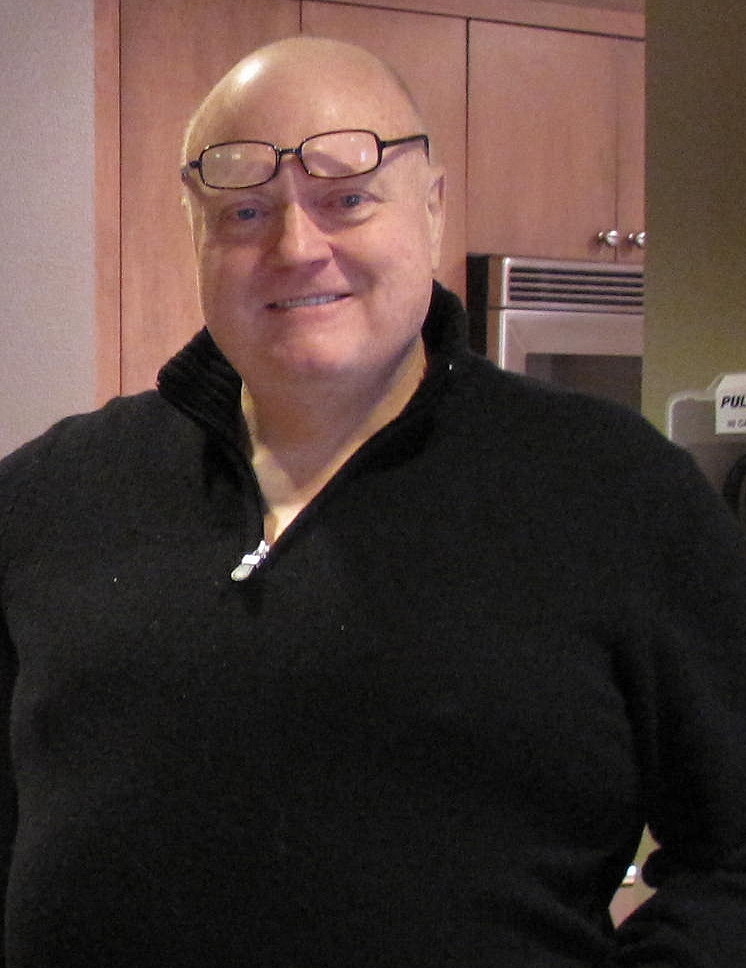 |
| Steve at a baby shower for niece Michelle, just prior to his kidney transplant in 2/09. |
 |
| Steve at our wedding in 1/08 |
There's no way to convey the loss we feel, but it's enormous. The cost of Steve living the way he was - with significant suffering - was far too high. As much as I loved Steve with all my heart and soul, I couldn't bear to think he was living for me in such agony.
At the party, I realized that I was one of the new kids on Steve's block. Many of his friends had known him for 40-50 years. I had known him for only six. But we had in six years what many couples don't achieve in decades. We were each loved...truly loved...by the other.
I wish to convey my deep appreciation to Michael and Andrea Ramage for hosting this event, and to the many others who contributed as well.
Take care,
Linda Gromko, MD
Thursday, April 28, 2011
Thanks to our Firefighters and Paramedics
Brita and I paid a visit this evening to the Lake Forest Park Fire Department. These are the folks who came to assist Steve on a number of occasions - I think at least four times over a period of nine months.
We made up a gift basket of nuts, trail mix, and candy from Costco. Not from the recommended diabetic-renal diet, to be sure, but treats that might help our helpers get through a night.

I remember one evening when Steve was having severe left arm pain during a Home Dialysis run. I called 911 because I was worried that Steve's pain might be cardiac in origin. Hemodialysis can look daunting: blood running through large-bore tubing, alarms sounding. It wasn't the dialysis I was concerned about; that was handled! I finished getting Steve unhooked from the machine and the medics took over.
Another night, the firefighters helped us get Steve up our steep driveway in his wheelchair - in the snow!
And, of course, there was the unimaginable morning of April 13 - when the medics transported my unresponsive Steve to the hospital, with Steve descending into cardiac arrest on the way. I was so grateful that the medic phoned me (in my car following behind) - verifying that I wanted no further intervention. I think years ago, full intervention would have occurred without question.
We are grateful for these well-trained, good natured firefighters and paramedics who have helped our family on numerous occasions. Thank you for making such troubling situations more tolerable.
Take care.
Linda Gromko, MD
We made up a gift basket of nuts, trail mix, and candy from Costco. Not from the recommended diabetic-renal diet, to be sure, but treats that might help our helpers get through a night.
I remember one evening when Steve was having severe left arm pain during a Home Dialysis run. I called 911 because I was worried that Steve's pain might be cardiac in origin. Hemodialysis can look daunting: blood running through large-bore tubing, alarms sounding. It wasn't the dialysis I was concerned about; that was handled! I finished getting Steve unhooked from the machine and the medics took over.
Another night, the firefighters helped us get Steve up our steep driveway in his wheelchair - in the snow!
And, of course, there was the unimaginable morning of April 13 - when the medics transported my unresponsive Steve to the hospital, with Steve descending into cardiac arrest on the way. I was so grateful that the medic phoned me (in my car following behind) - verifying that I wanted no further intervention. I think years ago, full intervention would have occurred without question.
We are grateful for these well-trained, good natured firefighters and paramedics who have helped our family on numerous occasions. Thank you for making such troubling situations more tolerable.
Take care.
Linda Gromko, MD
Saturday, April 23, 2011
Steve's Story
Since Steve died, I've had requests on how to get ahold of the book I wrote.
Order "Complications: A Doctor's Love Story," through www.LindaGromkoMD.com. A Kindle version is also available on Amazon.com.
"Complications" covers Steve's first year of renal failure - there's a lot of medical content, but I wrote it to be understandable for those who don't speak "medicine." It also covers our first meeting, our love story, our creation of a new family in midlife. The chapter on Brita is my personal favorite!
"Arranging Your Life When Dialysis Comes Home: 'The Underwear Factor'" is clearly written for a niche of folks who urgently need a practical step-by-step guide. Co-authored by Interior Designer Jane McClure, this book helps people maintain their homes and lives - performing critical medical treatments at home while not feeling like you live in an ICU! It can also be ordered through http://www.lindagromkomd.com/, with a Kindle version available on Amazon.
Thank you for your interest.
Take care.
Linda Gromko, MD
Order "Complications: A Doctor's Love Story," through www.LindaGromkoMD.com. A Kindle version is also available on Amazon.com.
"Complications" covers Steve's first year of renal failure - there's a lot of medical content, but I wrote it to be understandable for those who don't speak "medicine." It also covers our first meeting, our love story, our creation of a new family in midlife. The chapter on Brita is my personal favorite!
"Arranging Your Life When Dialysis Comes Home: 'The Underwear Factor'" is clearly written for a niche of folks who urgently need a practical step-by-step guide. Co-authored by Interior Designer Jane McClure, this book helps people maintain their homes and lives - performing critical medical treatments at home while not feeling like you live in an ICU! It can also be ordered through http://www.lindagromkomd.com/, with a Kindle version available on Amazon.
Thank you for your interest.
Take care.
Linda Gromko, MD
Sunday, April 17, 2011
Heroic Measures
Steve's nephrologist, Dr. Smiley Thakur, called after Steve died. We talked about Steve's final days, and the many difficulties Steve had endured over the past three years.
On the morning Steve actually died, I had called Medic One. Steve was essentially unresponsive. The paramedics asked if I wanted him intubated (i.e. on a ventilator) if his condition deteriated on the way to the hospital. I declined intubation - should that be considered. En route to the hospital, the lead paramedic called me to clarify that I wanted no further intervention, as Steve had just gone into cardiac arrest.
While Steve had always been a "full code," i.e. full emergency intervention, his situation had clearly changed. As his Durable Power of Attorney for Health Care, I knew that Steve didn't want to go on if his quality of life were even more severely limited.
He wanted to go "when the banter stopped."
Steve had every conceivable intervention possible over the past three years: a kidney transplant which failed - leaving him with a wound that could have admitted a housecat into its depth, a major open heart surgery, sepsis, critical illness myopathy, gangrenous toes, a leg amputation.
Dr. Thakur commented, "You know the difference: when you're doing things to him, rather than for him. You saw that, and made the right call."
Steve's home care was complicated. His blood sugars could vary from 30 to 300 in the span of a day.
And, of course, we did Home Dialysis - both hemo AND peritoneal dialysis. Because of Steve's impaired blood circulation, blood pressures were unreliable. And weights couldn't be obtained because of his mobility problems. So, we'd make an assessment of his volume status by using the cues we had: his appearance, his edema, thirst, how he felt. I could estimate his fluid status by checking the places in his body where fluid gathered. I so remember how the hospital residents would check his legs for this - but the fluid wouldn't be there. When he was fluid overloaded, he'd collect edema in his neck, his arms, his back.
With none of the conventional means to evaluate Steve's volume status, we were left to the most basic tools: good clinical observations.
In my opinion, these were the "heroic measures."
Steve's medical condition was far too complex to be "typical" of a home dialysis patient. Yet, dialyzing Steve at home meant far more normalcy in his life. I will never regret the decision we made to pursue this; it gave his final years far more dignity - and far greater contact with his family and friends.
I am also immensely grateful to Dr. Thakur for supporting our home dialysis care. It took courage on Smiley's part, too.
Steve's obituary is posted on http://www.legacy.com/.
Take care,
Linda Gromko, MD
On the morning Steve actually died, I had called Medic One. Steve was essentially unresponsive. The paramedics asked if I wanted him intubated (i.e. on a ventilator) if his condition deteriated on the way to the hospital. I declined intubation - should that be considered. En route to the hospital, the lead paramedic called me to clarify that I wanted no further intervention, as Steve had just gone into cardiac arrest.
While Steve had always been a "full code," i.e. full emergency intervention, his situation had clearly changed. As his Durable Power of Attorney for Health Care, I knew that Steve didn't want to go on if his quality of life were even more severely limited.
He wanted to go "when the banter stopped."
Steve had every conceivable intervention possible over the past three years: a kidney transplant which failed - leaving him with a wound that could have admitted a housecat into its depth, a major open heart surgery, sepsis, critical illness myopathy, gangrenous toes, a leg amputation.
Dr. Thakur commented, "You know the difference: when you're doing things to him, rather than for him. You saw that, and made the right call."
Steve's home care was complicated. His blood sugars could vary from 30 to 300 in the span of a day.
And, of course, we did Home Dialysis - both hemo AND peritoneal dialysis. Because of Steve's impaired blood circulation, blood pressures were unreliable. And weights couldn't be obtained because of his mobility problems. So, we'd make an assessment of his volume status by using the cues we had: his appearance, his edema, thirst, how he felt. I could estimate his fluid status by checking the places in his body where fluid gathered. I so remember how the hospital residents would check his legs for this - but the fluid wouldn't be there. When he was fluid overloaded, he'd collect edema in his neck, his arms, his back.
With none of the conventional means to evaluate Steve's volume status, we were left to the most basic tools: good clinical observations.
In my opinion, these were the "heroic measures."
Steve's medical condition was far too complex to be "typical" of a home dialysis patient. Yet, dialyzing Steve at home meant far more normalcy in his life. I will never regret the decision we made to pursue this; it gave his final years far more dignity - and far greater contact with his family and friends.
I am also immensely grateful to Dr. Thakur for supporting our home dialysis care. It took courage on Smiley's part, too.
Steve's obituary is posted on http://www.legacy.com/.
Take care,
Linda Gromko, MD
Subscribe to:
Posts (Atom)